


Tour leading by well trained team
Hassle-free and instant booking
100% customers satisfaction
reasonable price & best service
no hidden cost & secure payment
The Upper Dolpo Trek is one of the most remote, mystical, and culturally preserved trekking adventures in Nepal, offering an extraordinary journey into a hidden Himalayan world. Located in the far-western region of Nepal near the Tibetan border, this trek takes place within the vast and protected Shey Phoksundo National Park, known for its dramatic landscapes, rare wildlife, and pristine environment. Organized by Unique Sherpa Trek & Expedition Pvt. Ltd., the Upper Dolpo Trek provides a fully supported and expertly guided expedition into one of Nepal’s least explored regions.
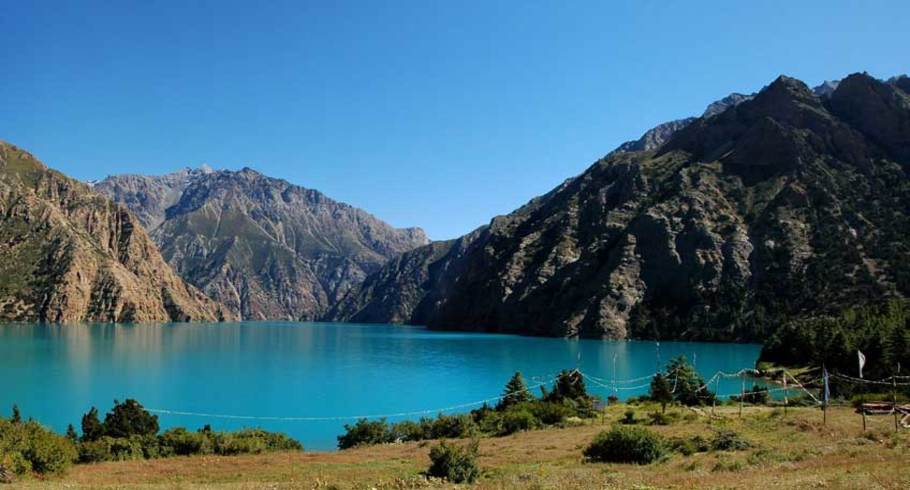
Geographically, Upper Dolpo is characterized by rugged, high-altitude terrain that resembles the Tibetan plateau. The region lies in a rain shadow area, resulting in dry, barren landscapes with cliffs, deep valleys, and high mountain passes. One of the most iconic natural features is Phoksundo Lake, a stunning turquoise lake surrounded by rocky hills and snow-capped peaks. The trek involves crossing several high passes such as Kang La and Saldang La, often above 5,000 meters, making it physically demanding but incredibly rewarding. The region’s isolation has helped preserve its natural beauty, with minimal human impact and breathtaking panoramic views throughout the journey.
The human aspect of Upper Dolpo is equally fascinating, as the region is home to communities that have maintained their traditional lifestyles for centuries. The people of Dolpo rely on agriculture, livestock herding, and trade, much like their ancestors did along the ancient salt trading routes between Nepal and Tibet. Life in this region is shaped by harsh climatic conditions and geographical isolation, resulting in a strong sense of resilience and self-sufficiency. Trekkers have the opportunity to observe and interact with locals, gaining insight into their daily routines, social structures, and a deep connection to the land. The simplicity and authenticity of life in Upper Dolpo make it a truly unique cultural experience.
Culturally, Upper Dolpo is heavily influenced by Tibetan traditions, with a strong presence of both Tibetan Buddhism and the ancient Bon religion. Villages such as Saldang, Shey, and other scattered settlements are characterized by stone houses, monasteries, and prayer flags. A major cultural highlight is Shey Gompa, a sacred monastery that plays an important role in the spiritual life of the region. Festivals, rituals, and religious ceremonies are an integral part of local life, reflecting a deep spiritual connection to the mountains and nature. The isolation of the region has allowed these traditions to remain largely unchanged, offering trekkers a rare glimpse into a preserved Himalayan culture.
The Upper Dolpo Trek is considered a challenging and remote trekking expedition, requiring good physical fitness, endurance, and preparation. Unlike other trekking regions, infrastructure is limited, and most of the journey involves camping rather than staying in teahouses. The trek offers solitude, untouched wilderness, and a true sense of adventure. With Unique Sherpa Trek & Expedition Pvt. Ltd., trekkers receive complete logistical support, including experienced guides, porters, camping equipment, and safety measures. The company ensures proper acclimatization, route planning, and cultural interpretation, making the journey both safe and enriching. This trek is ideal for experienced trekkers seeking a remote and off-the-beaten-path Himalayan adventure.
The 2015 Nepal earthquake had minimal impact on the Upper Dolpo region due to its distance from the epicenter. As a result, the natural landscapes and traditional settlements remained largely unaffected. However, the region continues to benefit from sustainable tourism, which helps support local communities and preserve their cultural heritage. Trekking in Upper Dolpo contributes directly to the livelihoods of local people and promotes responsible tourism practices.
The best time to undertake the Upper Dolpo Trek is during spring (May to June) and autumn (September to October). These seasons offer stable weather, clear skies, and ideal trekking conditions. Due to its location in a rain shadow area, Upper Dolpo is also suitable for trekking during the monsoon season, when other regions of Nepal experience heavy rainfall. Winter trekking is possible but extremely challenging due to cold temperatures and snow-covered passes. Planning your journey with Unique Sherpa Trek & Expedition Pvt. Ltd. ensures proper timing, safety, and expert guidance throughout the expedition.
Overall, the Upper Dolpo Trek is a once-in-a-lifetime experience that combines remote wilderness, ancient culture, and high-altitude adventure, making it one of the most extraordinary trekking journeys in Nepal.
Day 1: Arrival in Kathmandu (1,350m/4,264ft) and transfer to your hotel.
Day 2: Kathmandu sightseeing and excursion day (1,350m/4,264ft), 10–15 km in 5–6 hours.
Day 3: Fly from Kathmandu (1,350m/4,264ft) to Nepalgunj (150m/492ft), 1-hour flight.
Day 4: Fly to Juphal (2,320m/7,601ft) and trek to Sulighat (2,070m/6,790ft), 12 km in 3–4 hours.
Day 5: Trek from Sulighat (2,070m/6,790ft) to Renje (3,010m/9,873ft), 18 km in 6–7 hours.
Day 6: Trek from Renje (3,010m/9,873ft) to Ringmo Village (3,440m/11,286ft) via Phoksundo Lake, 14 km in 5–6 hours.
Day 7: Acclimatization and exploration around Ringmo Village and Phoksundo Lake (3,440m/11,286ft), 4–6 km in 2–3 hours.
Day 8: Trek from Ringmo (3,440m/11,286ft) to Phoksundo Khola (3,630m/11,900ft), 13 km in 5–6 hours.
Day 9: Trek from Phoksundo Khola (3,630m/11,900ft) to Phoksundo Bhanjyang (4,130m/13,550ft), 10 km in 5–6 hours.
Day 10: Cross Kang La Pass (5,160m/16,925ft) and trek to Shey Gompa (4,390m/14,400ft), 16 km in 7–8 hours.
Day 11: Rest and exploration day at Shey Gompa (4,390m/14,400ft), 3–5 km in 2–3 hours.
Day 12: Trek from Shey Gompa via Saldang La Pass (5,010m/16,400ft) to Namgung Village (4,430m/14,530ft), 18 km in 7–8 hours.
Day 13: Sightseeing around Namgung Village and trek to Saldang (4,050m/13,287ft), 10 km in 3–4 hours.
Day 14: Trek from Saldang (4,050m/13,287ft) to Yangze Gompa (4,960m/16,267ft), 12 km in 5–6 hours.
Day 15: Trek from Yangze Gompa (4,960m/16,267ft) to Sibu (4,560m/14,957ft), 14 km in 5–6 hours.
Day 16: Trek from Sibu (4,560m/14,957ft) to Jeng La Phedi (4,900m/16,072ft), 12 km in 5–6 hours.
Day 17: Cross Jeng La Pass (5,090m/16,696ft) and trek to Do Tarap (4,040m/13,255ft), 15 km in 7–8 hours.
Day 18: Acclimatization and exploration day at Do Tarap (4,040m/13,255ft), 5–8 km in 3–4 hours.
Day 19: Trek from Do Tarap (4,040m/13,255ft) to Tarap Khola/Karma Khola (3,800m/12,464ft), 16 km in 6–7 hours.
Day 20: Trek from Tarap Khola (3,800m/12,464ft) to Khani Gaun (3,150m/10,332ft), 18 km in 6–7 hours.
Day 21: Trek from Khani Gaun (3,150m/10,332ft) via Tarakot (2,537m/8,323ft) to Dunai (2,030m/6,660ft), 22 km in 7–8 hours.
Day 22: Trek from Dunai (2,030m/6,660ft) to Juphal (2,320m/7,610ft), 10 km in 3–4 hours.
Day 23: Fly from Juphal (2,320m/7,610ft) to Kathmandu (1,350m/4,264ft) via Nepalgunj, 2–3 hours.
Day 24: Final departure from Kathmandu (1,350m/4,264ft).
On the first day, our airport representative welcomes you at the Airport Terminal and then you will be taken to the MMT office at Kalahari. At the office, MMT’s expert will provide you with further detailed information about the trip and all the terms and conditions will be disclosed. Eventually, our representative safely and comfortably takes you to the respective hotel. You can enjoy the city nightlife in the main tourist hub of Kathmandu: Thamel. Overnight in Kathmandu at 3-star Hotel with breakfast.
This day is scheduled to visit the UNESCO-listed World Heritage sites including Swayambhunath, Patan Durbar Square, Bouddhanath, Pashupatinath, along with other historical and holy places. Swoyambnhunath: After a delightful breakfast in the morning, our city tour guide takes you to Swayambhunath which is at the top of the hillock to the west of Thamel. The temple is one of the oldest temples of Nepal which is popular among foreigners as ‘Monkey Temple. The spectacular scenery, cheerful monkeys, the tranquil environment makes Swoyambhu worth visiting.
Patan Durbar square:
The excursion then accelerates towards Patan, the city of festival, feast, art, and culture. The city is a prominent place to visit due to ancient Patan Durbar square, Krishna Mandir, Ganesh Mandir, and many more temples and places. We inspect the art, history, cultural importance, and architectural craftsmanship of the city.
From Kathmandu, we take an early morning flight to Nepalgunj, one of the huge business hubs and industrial areas of Nepal. After half an hour of flight, we land at Nepalgunj airport and transfer to the 2-star hotel for check-in. The remaining day at Nepalgunj is for visiting some interesting places and giving some rest to limbs and muscles.
Overnight in Nepalgunj at a 2-star Hotel
Meals: Breakfast/Lunch/Dinner
After an early morning breakfast, we drive to Nepalgunj airport and take a flight to the Dolpo region. After 25-35 minutes of scenic mountain flight, the plane landed at Juphal airport: the only airport in the Dolpo region. From Juphal, we follow the terraced farmland along the Bheri River and walk through the narrow gorge for a few hours until the trail comes to the administrative headquarters of Dolpa: Dunai. In the evening, we explore the headquarters and spend a good time with fellow trekkers. Tonight, we stay at Dunai.
After early morning breakfast, we drive to Nepalgunj airport and take a flight to the Dolpo region. After 25-35 minutes of scenic mountain flight, the plane land at Juphal airport: the only airport in the Dolpo region. From Juphal, we follow the terraced farmland along the Bheri River and walk through the narrow gorge for a few hours until the trail comes at the administrative headquarter of Dolpa: Dunai. In the evening time, we explore headquarter and spend a good time with fellow trekkers. Tonight, we stay at Dunai.
From Dunai,
